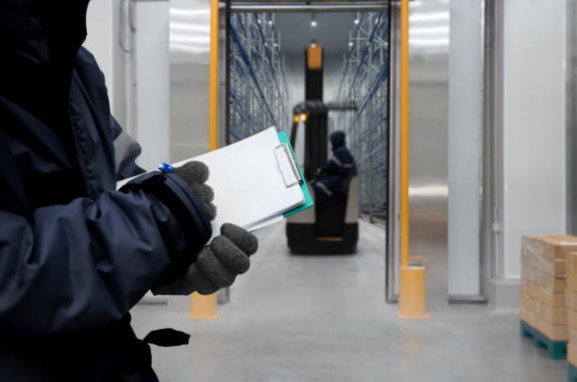
What Businesses Should Know About Temperature-Controlled Warehousing and Transportation

Temperature-controlled warehousing and transportation play a critical role in modern supply chains, especially for industries dealing with food, pharmaceuticals, chemicals, and other sensitive products. From the moment goods leave production to the point they reach customers, maintaining the right temperature conditions is essential to protect product quality, safety, and compliance.
By controlling factors such as temperature stability, handling time, storage conditions, and transit exposure, businesses can significantly reduce product loss, avoid compliance issues, and extend product shelf life. When these controls are missing or poorly managed, even a short delay or small deviation can result in major financial and reputational damage.
In this article, we explain the fundamentals of temperature-controlled warehousing and transportation and outline practical steps businesses can take to improve efficiency, reliability, and risk management across their cold chain operations.
Importance of Temperature-Controlled Logistics
Unlike many other sectors, industries that rely on temperature-controlled logistics face unique challenges. The most critical of these is product sensitivity. Perishable and regulated goods can deteriorate quickly when exposed to unsuitable conditions, even for brief periods.
Temperature-controlled logistics ensure that products remain within safe limits throughout storage and transportation. This not only preserves product quality but also protects businesses from losses, recalls, and regulatory penalties.
Before discussing best practices, it is important to clearly understand what temperature-controlled warehousing and transportation involve and why they are so important for business operations.
What Is Temperature-Controlled Warehousing and Transportation?
Temperature-controlled logistics refers to the coordinated process of storing and transporting goods within specific temperature ranges to maintain their integrity. This process begins when products arrive at a warehouse and continues until they are delivered to their final destination.
It typically includes the following stages:
receiving temperature-sensitive goods;
temperature verification at arrival;
storage in controlled environments (frozen, chilled, or controlled ambient);
inventory management and rotation;
staging and preparation for dispatch;
loading into temperature-controlled vehicles;
transportation under monitored conditions;
unloading and final delivery.
Each stage presents its own risks. Businesses are responsible for ensuring that proper controls are in place, either through in-house operations or by partnering with experienced temperature-controlled logistics providers.
Why Is Temperature Control So Important for Businesses?
A business’s ability to deliver products in good condition directly impacts customer trust, brand reputation, and profitability. Products that fail to meet quality or safety standards cannot be sold, often resulting in write-offs or recalls.
In regulated industries such as food and pharmaceuticals, temperature deviations can also lead to compliance violations and legal consequences. Even when regulations are not involved, customers increasingly expect transparency and accountability in how products are stored and transported.
Effective temperature-controlled warehousing and transportation reduce risk, improve consistency, and support long-term business growth.
5 Key Steps to Improve Temperature-Controlled Warehousing and Transportation
Now that we understand what temperature-controlled logistics is and why it matters, let’s look at five essential steps businesses can take to improve efficiency and reliability in their operations.
1. Ensure Proper Storage Design and Temperature Zoning
Temperature-controlled warehouses should be designed to handle different product requirements, not treated as a single cold space. Products may require frozen, chilled, or controlled ambient conditions, and each must be managed separately.
Key considerations include:
clearly defined temperature zones
minimal movement between zones
layouts that support airflow
storage systems that reduce unnecessary handling.
Proper zoning not only protects products but also improves energy efficiency and operational control.
2. Focus on Receiving and Handling Procedures
Receiving is one of the most critical moments in temperature-controlled logistics. Products may already be under stress from transit, and delays or improper handling can worsen the situation.
Businesses should ensure:
temperature checks are conducted at arrival
unloading is done quickly and efficiently
Docks are temperature-managed where possible
deviations are documented and addressed immediately.
Strong receiving procedures set the foundation for safe storage and transportation.
3. Maintain Accurate Inventory Control and Rotation
Temperature control alone is not enough if inventory is poorly managed. Products that sit too long in storage increase the risk of spoilage and loss.
Effective temperature-controlled warehousing includes:
FIFO (First In, First Out) or FEFO (First Expired, First Out) processes
real-time inventory visibility
regular stock reviews
coordination between inbound and outbound planning
Good inventory practices ensure that products move through the system efficiently and safely.
4. Prepare Transportation Equipment and Loads Carefully
Many temperature-related issues occur before a vehicle even leaves the warehouse. Pre-cooling, equipment inspections, and proper loading are essential.
Businesses should pay attention to:
pre-cooling trailers or containers to the required temperature;
verifying equipment functionality before loading;
loading products in a way that allows proper airflow;
avoiding overloading or uneven stacking.
Careful preparation helps maintain stable temperatures throughout transit.
5. Monitor Conditions and Respond Quickly to Deviations
Monitoring temperature during storage and transportation is now standard practice, but monitoring alone is not enough. What matters is how quickly and effectively issues are addressed.
Reliable operations include:
continuous temperature monitoring;
clear acceptable temperature ranges;
defined response procedures for deviations;
trained staff who can take corrective action.
Quick responses can prevent small issues from becoming major losses.
Special Attention for Highly Perishable and Regulated Products
Certain products require extra care due to their sensitivity. Fresh produce, meat, dairy, pharmaceuticals, and chemicals often need stricter controls and faster handling.
For example:
fresh fruits and vegetables may require rapid transport and humidity control;
meat and dairy typically require refrigerated or frozen environments;
pharmaceuticals often require documented temperature compliance.
In these cases, handling procedures should closely mirror ideal storage conditions at all times.
The Role of Documentation and Compliance
Temperature-controlled logistics often involve regulatory requirements. Accurate documentation helps businesses demonstrate compliance and maintain transparency.
Important records may include:
temperature logs at key stages;
handling and storage procedures;
deviation reports and corrective actions;
audit-ready documentation.
Beyond compliance, documentation builds trust with customers and partners.
Final Thoughts
Temperature-controlled warehousing and transportation are essential to protecting product quality and business reputation. While technology plays an important role, true reliability comes from well-designed processes, trained teams, and consistent execution.
By focusing on proper storage design, careful handling, disciplined transportation practices, and active monitoring, businesses can significantly reduce risk and improve efficiency.
When temperature-controlled logistics are managed correctly, they quietly support business growth by ensuring products arrive safely, consistently, and in compliance, exactly as customers expect.
For businesses looking to strengthen their temperature-controlled supply chain, working with an experienced logistics partner like 3PL Links can help bring consistency and control to both warehousing and transportation operations.